Unknown's avatar

Wooden Signs and Diabetic Children


On Wednesday I took delivery of 56 wooden signs, destined for Camp Huronda near Huntsville, Ontario. Since they had to be there before the camp closed on Saturday, what better way to deliver them on a beautiful summer day than by motorcycle?

Thursday morning we had all of the signs and an over-night bag snugly packed into our little cargo trailer that was hitched to our Suzuki Boulevard, and were heading north out of town. This was the first time that we’d pulled a trailer behind this bike, only an 800 cc, but it was incredibly easy going. We made it to Minden in time for lunch and a much needed stretch. By 2:00 we had found the camp, deep in the forest on Waseosa Lake Road.

I knew before we left that Camp Huronda is a camp for  children with Type 1 Diabetes, but we learned a whole lot more from Amanda when she greeted us and helped unload the boxes.

Camp Huronda is a 125 acre camp sponsored entirely by the Canadian Diabetic Association, private donations and geared-to-income fees paid by young campers who spend two weeks during the summer enjoying biking, hiking, swimming, kayaking, crafts and, more importantly, making friends with other children who understand the hardships of living with diabetes.

“We always have a highly qualified endocrinologist at camp and the health and blood sugars of every child is closely monitored. Usually insulin dosages can be cut by 20% while children are at camp because of the increased activities and healthy diet,” Amanda told us.

Camp Huronda

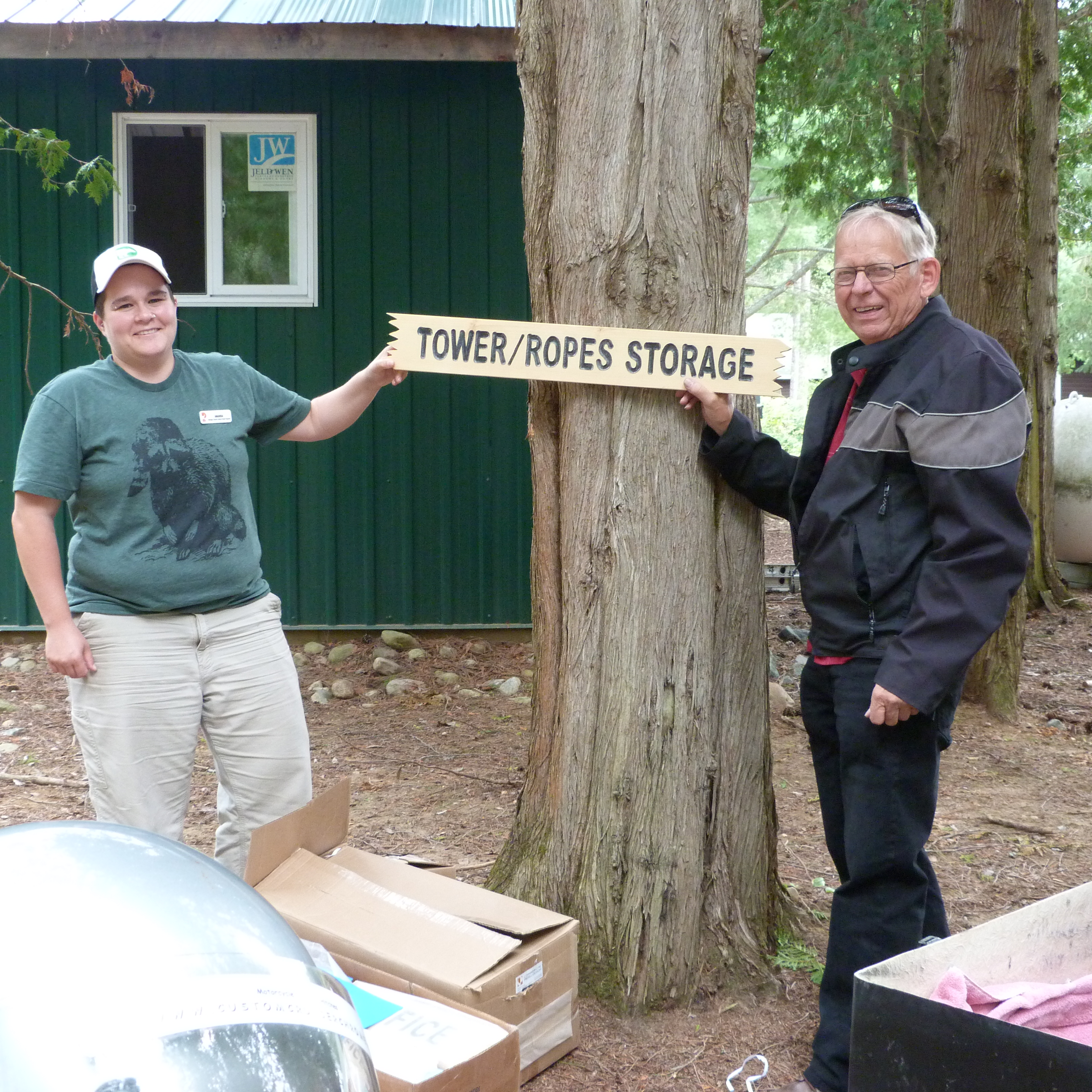
Amanda and Jim display one of the signs

Children are also taught how to manage their illness and how to administer their own insulin, sometimes for the first time.

I was impressed.Unlike previous generations of children suffering from this cruel disease, who were misunderstood and often taunted by their peers, these kids will have a much better chance of not only survival, but living happy, fulfilling lives.

Camp Huronda

Providing free delivery of 56 new signs for their camp was the least we could do to help.

We spent the rest of the day exploring the picturesque town of Huntsville and the evening resting up for another enjoyable ride on the twisty roads leading back home.

Huntsville Inn

We stayed at Huntsville Inn, an older but newly renovated motel on Main Street. The rooms are small, but clean and bright and contain all the amenities needed for a short-term stay.

All Saints Anglican Church

A beautiful church, appearing like a castle overlooking the banks of the river.


Huntsville Gardens

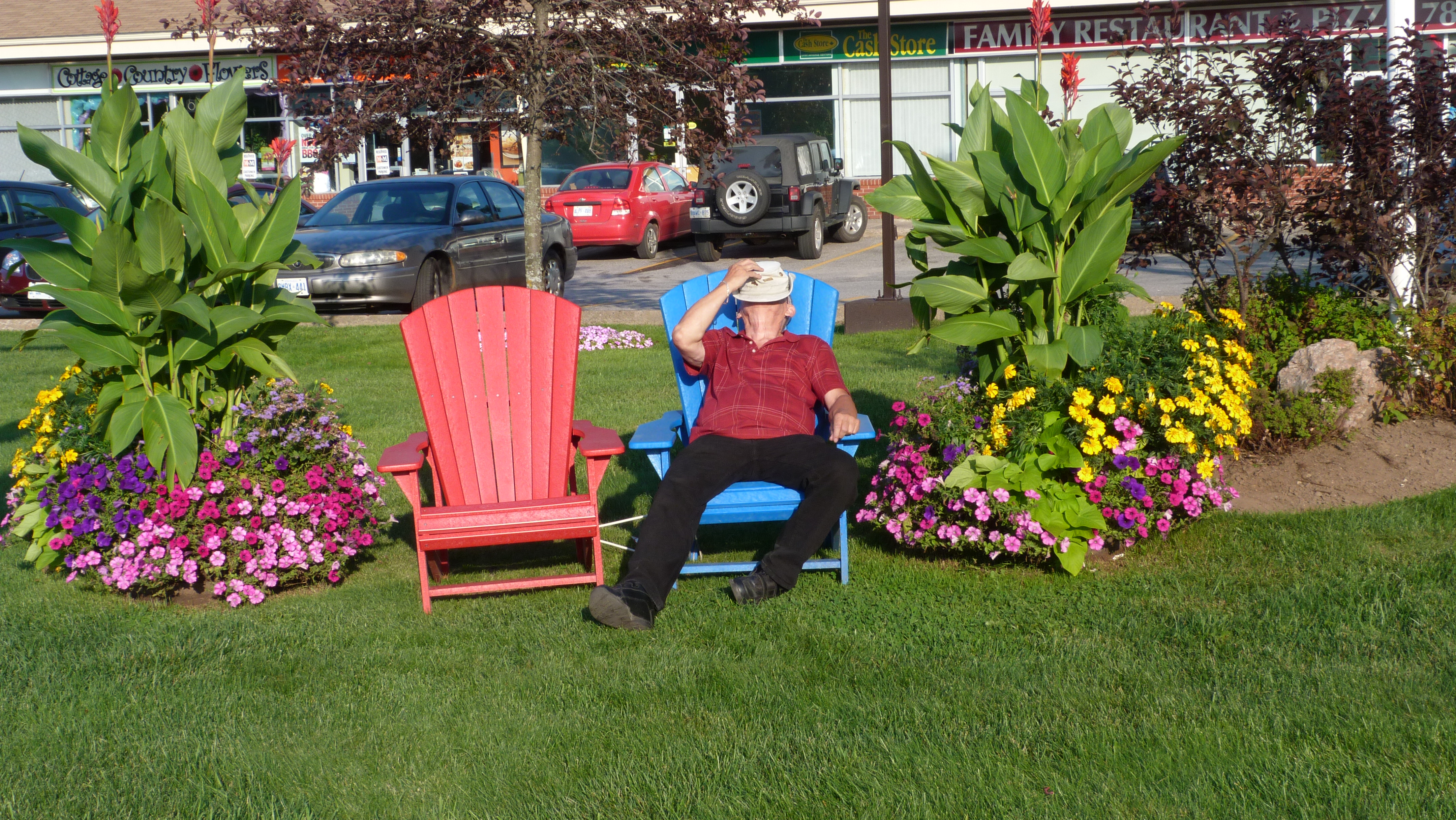
Jim resting his feet at one of the many mini-gardens on Main Street


Unknown's avatar

Are We an Over-drugged Society, Part II


When my ninety-seven year old mother was visiting at Christmas and she missed her supper-time meds because we were out one evening, I was concerned about her taking them when we got home, and then taking her bedtime ones shortly after. She, of course, had no such concerns, “They’re only a vitamin,” she said.

After she’d gone to bed I took to Google to see what I could find out about these “vitamins” that she was on. Because she lives in a Retirement Home rather than a Long-term Care Facility, her family isn’t informed of any additions or changes to her medications. My brother had asked her doctor recently if any of her meds could be the cause of her very recent and quick onset of dementia. He was assured that it was simply old age and the drugs had nothing to do with it.

We knew that she was on a mild anti-depressant (“nerve pill” as she calls it) as she has suffered from bouts of severe depression for most of her life. But, I was appalled to learn through my research that she was not only on two anti-depressants, but also an anti-psychotic medication, called risperidone.

When we took her home after the holidays, I asked the nurse at the Retirement Home, why Mom was on an anti-psychotic. Her response was “It was prescribed when she was getting really anxious.” She agreed that it might not be necessary and she’d ask the doctor about prescribing something else to be given only when needed rather than every day.

It was an item on the Global News program 16 x 9, a couple of weeks later, that caught my attention this time. More precisely, the words “Risperidone”, “Anti-psychotic” and “Nursing Homes.”

It seems that recently there has been an uproar in BC over the routine use of anti-psychotic drugs to “calm” the residents, some to the point of making them zombie-like, despite Health Canada warnings that these drugs should NOT be given to patients with dementia. It wasn’t until the children of some of these people began to ask questions and insist that they be taken off these meds, that an investigation began and new methods of calming the distressed, such as physical and mental stimulation, were introduced with great success. Changes are being introduced throughout the province of BC, but the practice of using the drugs is still prevalent in other provinces of this great country.

I understand that at ninety-seven Mom doesn’t have a long life expectancy, but she still deserves to live her last days with dignity. If her medications are causing her to no longer care about the things that were important to her, such as her personal grooming, then it’s time to take a stand.

The lesson here is that we Baby Boomers need to insist on being informed about our elderly parents’ health care and medications, just the way we did when our children were young.

Who would have thought that the day would come when parents would live long enough to become the children?

To get the whole story go to: Global News, Nursing homes routinely administer anti-psychotics

Unknown's avatar

Are We an Over-drugged Society?


During the last few months a couple of news stories have caused me some major concern. I’ve always been one to avoid pharmaceuticals whenever at all possible, and every time that I’ve caved into a doctor’s insistence, I’ve regretted it and I haven’t been long getting off the prescription.

I’ll talk about the first one today.

I’m not sure that I was even yet fifty when my GP sent me for a bone mineral density test, the only reasons being that I was approaching “that age”, early menopausal and small boned. I’d never broken a bone in my life. I was very skeptical, and was even more so when the results came back that I had osteopenia! (osteopenia is a condition in which bone mass is lower than “normal”, but not low enough to qualify as osteoporosis) When I asked my doctor how that could be, since I’d spent the last twenty-five years of my life doing all the things recommended to avoid such a thing, her response was, “Well if you hadn’t done those things I guess it would have been worse!” I agreed to take calcium and Vitamin D supplements, and started a daily walking routine. I refused to take the pushed “hormone replacement therapy” and was happy when it was temporary taken off the market. However five years later,  the Nurse Practitioner  at my new doctor’s office told me the results of my latest bone density test (I’d been having them yearly since the first one) had not improved since I was moved into the osteoporosis category after my second test several years earlier. I gave in to taking the newest “natural” supplement and my bone density increased to the osteopenia category. I still felt something wasn’t right, but I was without evidence to protest. Then, a couple of months ago, while sitting in a waiting room, I came across an article in Vogue Magazine that made me sit up and take notice.

The story, written by Patricia Morrisroe, initially sounded like my story. She too had been urged to have a bone mineral density test when she reached age fifty, and had been diagnosed with osteopenia.  She too accepted, reluctantly, a prescription for a bone building medication.  She later stopped taking the drug due to resulting other health issues.  Her subsequent research gave me reason to give up on my weekly dose of such a drug.  After reading the article, even my partner, normally a firm believer in following any doctor’s suggestions without much question,  had no arguments for me.

I’ll leave it to you to go to the link where I found it and read the full article.  Here are  the five main points that determined my decision:

1.  Osteopenia is no longer viewed as a problem that automatically warrants medication, except in rare cases. People with osteopenic bones have such a low fracture rate that it doesn’t make sense to put them on a drug to prevent something that may not happen for several decades, if at all.(1)

The definition of Osteoporosis has evolved over the years and was once diagnosed only after someone had sustained a fragility fracture. In 1994, after the World Health Organization convened a meeting of experts, osteoporosis was defined by bone mineral density, the one measure of bone health available.  ‘Normal’ bones were those of a 30-year-old woman(2), and anyone who deviated 2.5 or more below that standard had osteoporosis, anyone in between had osteopenia.

2.  Doctors are now questioning the  long-term safety of the current drugs, and how often a woman should take the test, and if it is even valuable.

3. New data from the U.S. Preventive Services Task Force, an independent panel that develops recommendations for disease prevention, indicated no solid evidence that testing a patient’s bone density helped her avoid fracture…density is only one part of the picture; bone quality is determined by othe components, such as the micro-architecture of the bone and its capacity for self-repair.(3)

4. As a small-boned person you may have lower readings on the machines, but you may have perfectly good bone, just less of it.

5. While most doctors believe in treating osteoporosis with medication, giving them without accurate diagnosis (i.e. legitimate risk factors) can be dangerous. The drugs can  have significant side effects, most commonly gastrointestinal problemsThe U.S.  FDA recently ordered the makers of the most commonly prescribe osteoporosis drugs, to carry a warning label, following reports of atypical thigh fractures. The accumulation  of these drugs being deposited in the bones for years, could ultimately lead to bones that are more brittle. There appears to be no such warning in Canada yet.

6. Not enough is known about the effects of these drugs, because there have been no long-term studies done.

Pretty scary stuff! I think I’ll go for a walk in the sun. I need a break before telling you about my other discovery.

(1) (2) (3)Morrisroe, Patricia. “Breaking Point.(osteopenia and osteoporosis).” Vogue. 2011. Retrieved January 28, 2012 from accessmylibrary: http://www.accessmylibrary.com/article-1G1-249226931/breaking-point-osteopenia-and.html